
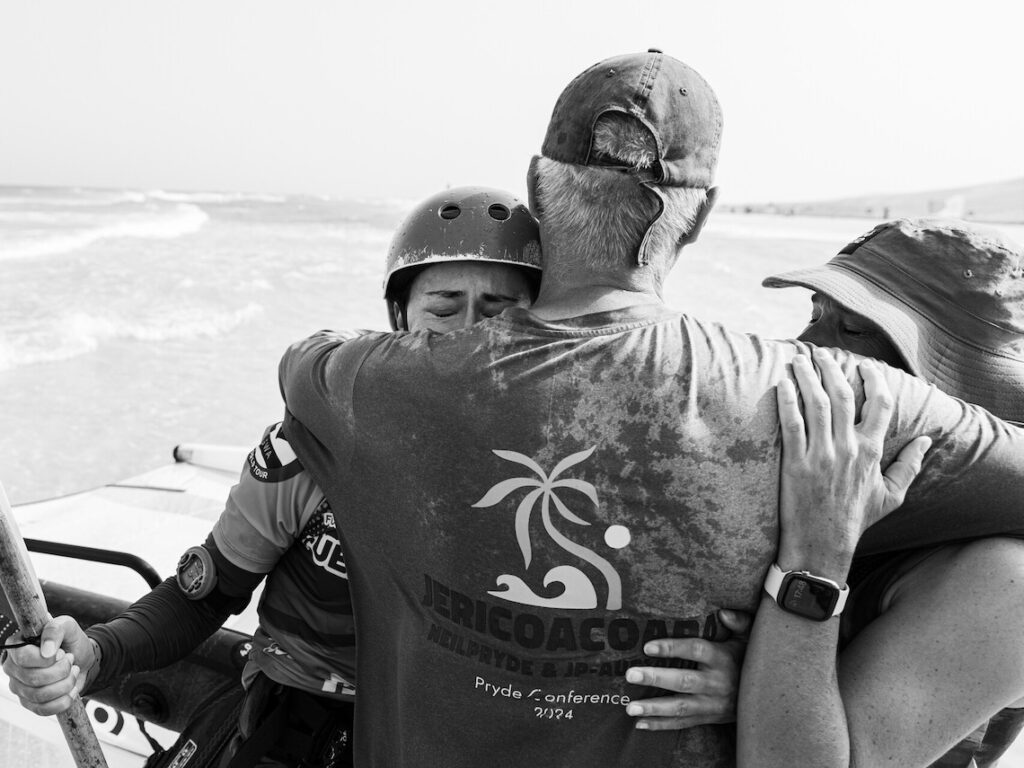
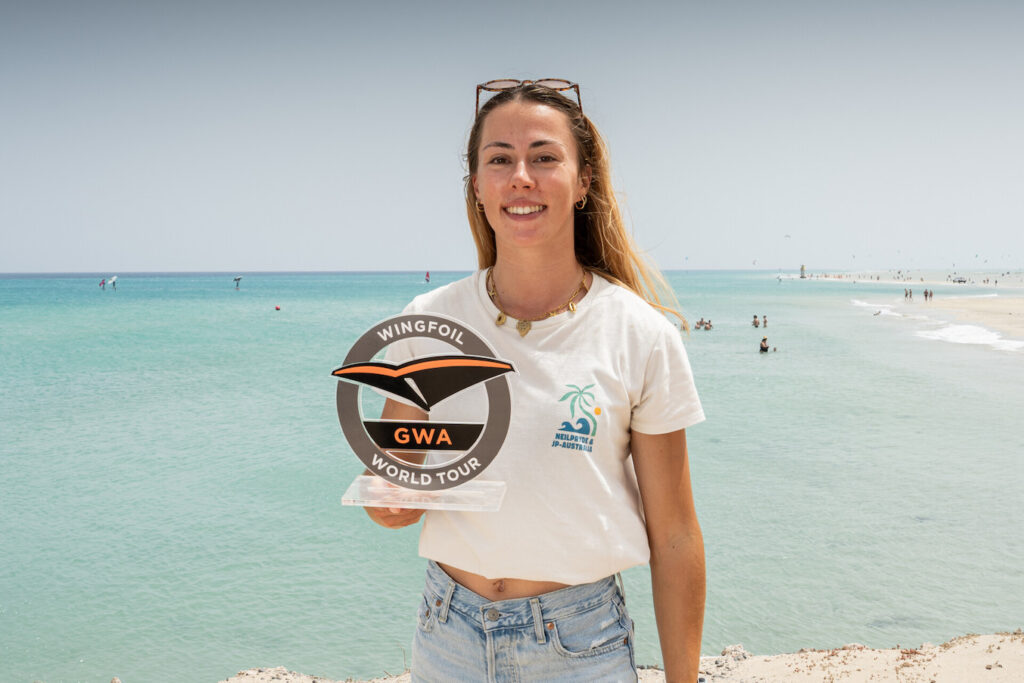
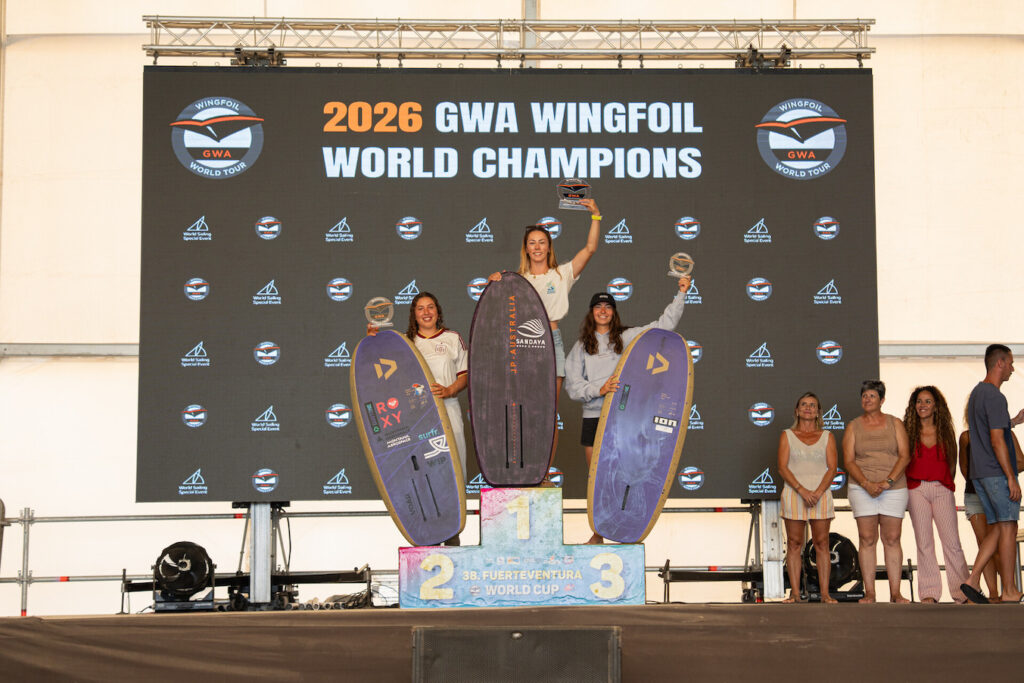
France’s Kylie Belloeuvre won her first GWA FreeFly-Slalom World Championship title in Fuerteventura, the Canary Islands, after several years as runner-up. On a coach to a French team training camp in Brittany, the 24-year-old told Ian MacKinnon how her mental coaches and visualisation techniques had been a vital part of her success, and the surprising ways that attitudes towards her had changed since she won the title.
Ian MacKinnon: Congratulations on your first World Championship title. How does it feel now?
Kylie Belloeuvre: Honestly, it’s pretty hard to believe. It’s something I’ve aimed for for years. My first world championships were in windsurfing in 2015. Ever since I’ve been working towards it. But you don’t say it out loud. I’m so thrilled that I managed to get it. I could have been doing this my whole life and never achieved this. It’s something new, but it’s so exciting. But I really want to do it again.
For me, being quite sensitive, it was a matter of stopping pursuing the goal so hard. I’m motivated from the start. I don’t need extra motivation that can increase the pressure. I was just trying to do my best every time. I was just grateful if I managed to show my best self. It’s not so much about the medal itself.
IM: What changed this time and how important was your mental preparation?
KB: I’ve been working on the mental thing for years. Always as a kid I was struggling with stress. I was losing my skills when I was under too much pressure. For example, last year in Abu Dhabi, as soon as it was possible to take the lead, or at least be equal, I messed it all up. Like losing the ability to start like usual. I lost my focus a little bit.
This time I did a lot of visualisation. We were working on two possibilities: where I was leading a race and making sure no-one overtakes, or I’m behind and I have to sneak past around the marks. I’ve been working on this for years.
I have two mental coaches. One is more for my general life. I have to be doing well in life, basically, then I feel stable to perform. The other one is specifically sports methods. I have specific visualisation techniques to get me into the flow.
IM: That sounds like a big asset, does it come from the French Sailing Federation?
KB: I could have got one from the French federation, but my engineering school is well adapted for athletes. They also offer some mental preparation. We have access to a gym and acupuncture and things like that. So, both mental coaches come through my school. It’s huge. In France one session can be €80 per hour and I have two or three sessions a month. I use it a lot and it helped me improve. It helped me a lot.
IM: You were second to Spain’s Nia Suardiaz for the last two seasons, and you were chasing her in the finals in Fuerteventura. You worked on that in visualisation, was it a good position to be in?
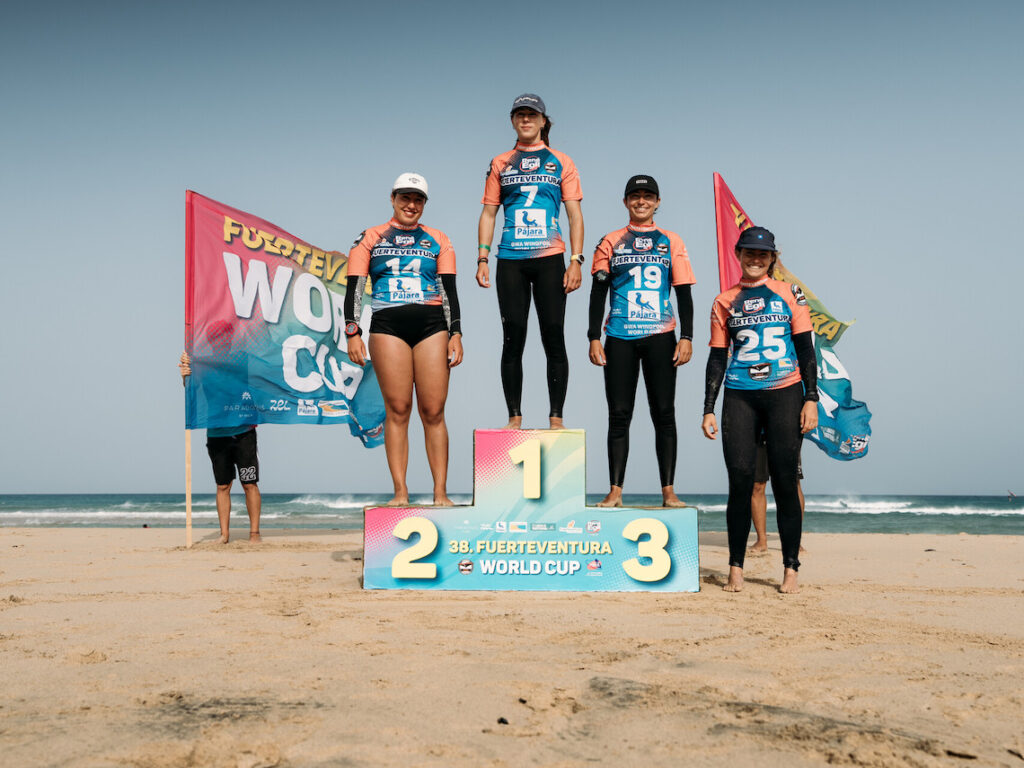
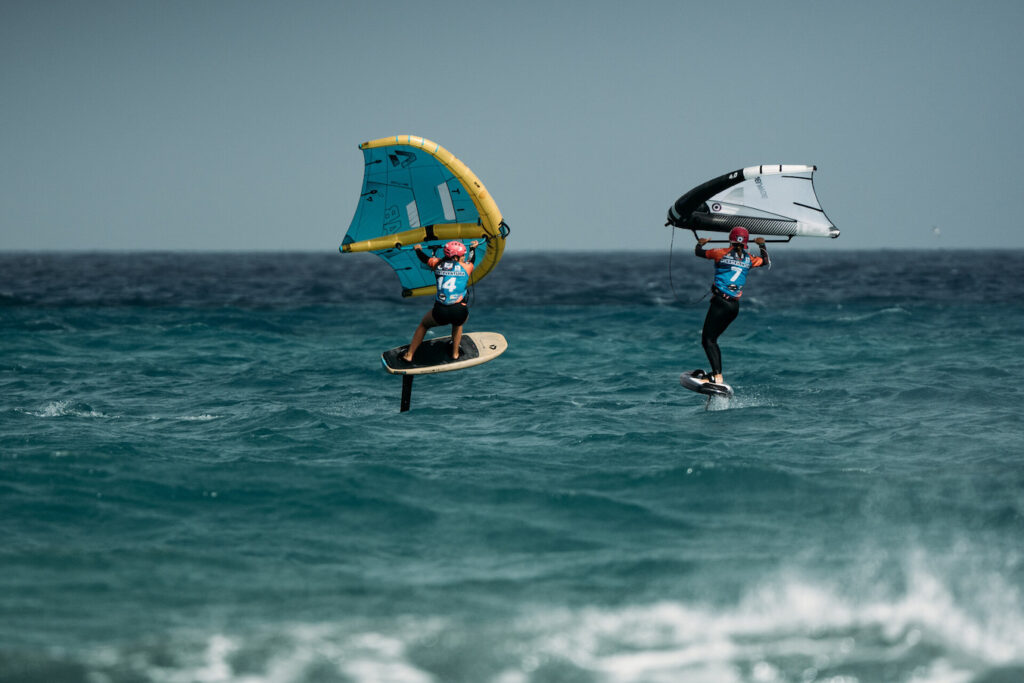
KB: I feel this time ‘yes’. The season was really short with no discards and little room for error. Being the chaser is better than being chased. The first days [in Fuerte] I was really struggling. I was being chased by Enoha [Laurent]. But when she didn’t qualify for the final I had the vice world champion title more or less secured. I had only one thing to do: to win. Whereas Nia had two things to do: win; and stop me winning. This time she was being chased and I think I got in her head in the race.
IM: Since you won the title, have you noticed any changes with you sponsors and the like?
KB: I hope it will help me find more sponsors more easily. Perhaps from sponsors outside the industry. But sometimes it’s been a bit weird, the change in people’s reaction. I was already twice vice World Champion, which was quite something. For people outside the industry who do not know how many girls there are, or how established the rankings are, it seemed to change a lot in their minds. I’m already proud that I had done something good [becoming vice World Champion twice]. It feels like I was really bad before, but now I’ve secured something with the world title. The title makes it more. It validates something much bigger.
images: Samuel Cárdenas